Broken on Purpose: The Cultural Hunger for Things That Fall Apart
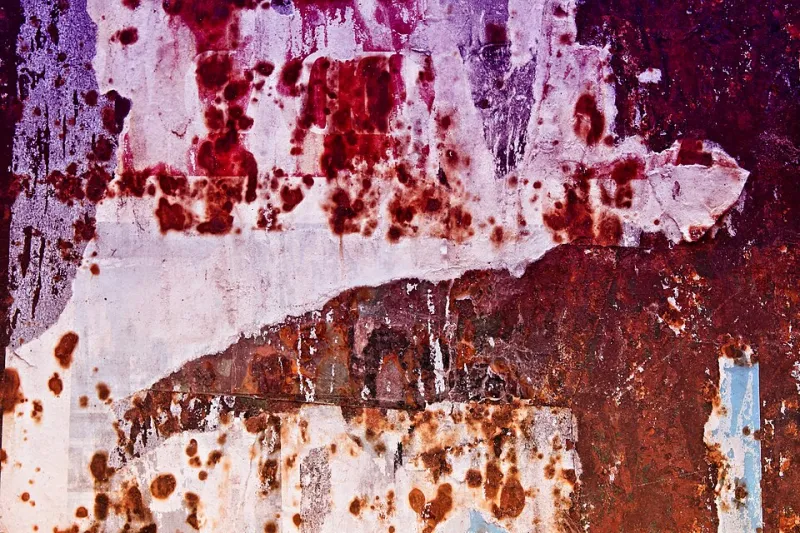
Photo: Marek Ślusarczyk (Tupungato) Photo portfolio, CC BY 3.0, via Wikimedia Commons
Somewhere between a corrupted JPEG and a waterlogged paperback, there's a feeling that's almost impossible to name. It's not quite nostalgia. It's not quite grief. It sits in that weird, liminal space where something is clearly dying and you find yourself thinking — god, that's gorgeous.
This isn't an accident. And it's not a glitch.
Across online communities, gallery spaces, and independent creative platforms, a growing cohort of artists and designers are deliberately building degradation into their work. They're letting things rot, corrupt, and fall apart — on purpose, with intention, and with an increasingly devoted audience watching every pixel crumble.
The Wabi-Sabi Pipeline
If you've spent any time in aesthetic-forward corners of the internet — the kind of Tumblr archives that never quite died, or the quieter pockets of Instagram that algorithm updates keep trying to bury — you've probably already encountered this sensibility without having a name for it.
The Japanese concept of wabi-sabi, which finds beauty in impermanence and imperfection, gets cited constantly in these conversations. But the version of it that's taken root in American digital culture isn't a direct translation. It's been remixed through something more specifically Gen Z and millennial: a deep, almost structural distrust of polish.
"Perfection online has always felt like a lie," says Dani Reyes, a digital collage artist based in Brooklyn who works almost exclusively with corrupted and deteriorating source material. "When everything looks too clean, too rendered, too finished — it starts to feel like propaganda. Decay is honest. It admits that things end."
Reyes's work — grainy, color-shifted, layered with artifacts that look like the digital equivalent of water damage — has found a dedicated following on platforms that weren't really designed for it. Which, she notes, is kind of the point.
Anxiety Has an Aesthetic
It would be easy to frame this as pure aesthetics — a design trend, a vibe shift, something that'll cycle out in eighteen months. But the people creating and consuming this work will tell you it goes somewhere deeper.
Climate anxiety is a real and documented force in the lives of younger Americans, and it's shaping creative output in ways that aren't always explicit. When the future feels genuinely uncertain — when "things falling apart" isn't metaphor but lived reality — art that sits comfortably inside entropy starts to make a different kind of sense.
"There's something almost relieving about it," says Marcus Cho, a curator who runs an independent online gallery focused on what he loosely calls 'deterioration art.' "When you grow up being told everything has to be optimized, improved, upgraded — and then you watch the world not actually work that way — art that embraces falling apart feels like permission. Like you don't have to pretend anymore."
Cho's gallery, which lives on a deliberately minimal website that he intentionally hasn't updated in two years, features work from artists who use processes like datamoshing, chemical photography degradation, and AI corruption filters to introduce entropy into otherwise stable images. The audience, he says, is fiercely loyal and deeply invested in a way that slicker, more polished platforms rarely produce.
The Anti-Perfectionism Rebellion
There's a generational dimension here that's worth sitting with. Millennials and Gen Z in the US came of age inside two overlapping cultural pressures: the relentless optimization logic of Silicon Valley, and the performance-of-self demands of social media. The result was a kind of ambient exhaustion with anything that looked too good.
Filters that made things look worse — lo-fi, grainy, overexposed — became popular for a reason. VSCO aesthetics, vaporwave's corrupted nostalgia, the entire visual language of liminal space photography: all of it is pointing at the same underlying hunger. We wanted things that looked like they'd been through something.
Sophie Marchetti, a graphic designer in Chicago who consults for indie brands specifically on what she calls "intentional imperfection," has watched this shift move from underground subculture into genuine market demand.
"I have clients now — real businesses, not just artists — asking me to make their stuff look more broken," she says, laughing a little. "Like, deliberately. They want the rough edges. They want the texture that says 'this wasn't made by a machine.' And honestly, that used to be a hard sell. Now it's almost mainstream."
Almost. The key word is almost. Because part of what makes this aesthetic work is its resistance to full commercialization. The moment something broken gets too perfectly packaged, it loses the thing that made it resonant in the first place.
When Decay Becomes the Medium
Some of the most interesting work happening in this space isn't just about deterioration — it uses deterioration as a literal creative tool.
Artists are leaving physical canvases outside to weather. Photographers are deliberately exposing film incorrectly, or processing it in substances that create chemical damage. Digital creators are running images through generational compression loss — saving and re-saving a JPEG dozens of times until the artifacts accumulate into something almost painterly.
There's a whole subculture around glitch art that's been building for over a decade, but what's different now is the emotional register. Early glitch aesthetics were often about transgression — breaking the machine, exposing the seams of digital reality. What's emerging now feels more tender than that. Less punk, more elegy.
"I think we've moved from 'look what I can break' to 'look how beautiful the breaking is,'" says Reyes. "That's a different emotional place. That's grief, almost. That's love."
The Community That Forms Around Ruins
Maybe the most quietly remarkable thing about all of this is the community it generates. Online spaces dedicated to decay aesthetics — Discord servers, forum threads, small-scale newsletters — tend to produce unusually tight-knit, emotionally engaged audiences.
There's something about shared appreciation for impermanence that creates intimacy. When you're all gathered around something that's falling apart, something that isn't going to last, the experience becomes collective in a way that pristine, permanent things rarely manage.
Cho puts it simply: "People come for the art. They stay because they found other people who feel the same way about the world."
Which might be the most honest summary of what this whole movement is actually about. Not decay for decay's sake. Not nihilism dressed up in lo-fi filters. But a genuine, searching attempt to find beauty inside impermanence — and to build community around the admission that nothing, not even the things we love most, is going to last forever.
In a culture that's spent decades selling us on permanence, optimization, and the idea that everything can be fixed with the right upgrade, choosing to love broken things is quietly radical.
And it's only getting louder.