Hunting Nothing: The Obsessives Who Travel the World to Record Pure Silence
There's a woman in Portland who has spent the last four years collecting dead air. Not white noise. Not ambient drone. Dead air — the specific, pressurized quiet that settles into a space after everyone has left and before anything new has arrived. She catalogs her recordings by location, date, and what she calls "texture." The inside of a decommissioned AM radio station in rural Oregon has a different texture than the backstage corridor of a shuttered theater in Detroit. She knows this the way a sommelier knows wine.
Her name is Renata, and she is not alone.
The Archive of Absence
Across the country, a loose, largely unaffiliated community of audio enthusiasts, experimental musicians, field recorders, and meditation practitioners has quietly — and that word is doing real work here — built an entire subculture around the pursuit of recorded silence. They share files on niche forums. They debate the merits of different microphone setups for capturing nothing. They argue, sometimes passionately, about whether true silence even exists or whether what they're really chasing is the closest approximation the physical world allows.
John Cage asked this question in 1952 when he staged 4'33", his famous composition in which a pianist sits at a keyboard and plays not a single note. The audience, forced into stillness, became the music — their rustling, their breathing, the ambient hum of the concert hall itself. Cage's point was that silence is never actually silent. There's always something. The question these collectors are wrestling with is whether that "something" is worth preserving, worth traveling for, worth building a practice around.
For most of them, the answer is an emphatic yes.
Why Nothing Sounds Like Something Now
It's worth asking why this is happening now, in this specific cultural moment. The obvious answer is that genuine quiet has become genuinely rare. Urban noise pollution is measurably worse than it was twenty years ago. The average American adult spends close to seven hours a day consuming some form of audio or visual media. Notification sounds have colonized even our most private spaces. Silence, as a result, has started to feel like a resource — scarce, precious, and worth going out of your way to find.
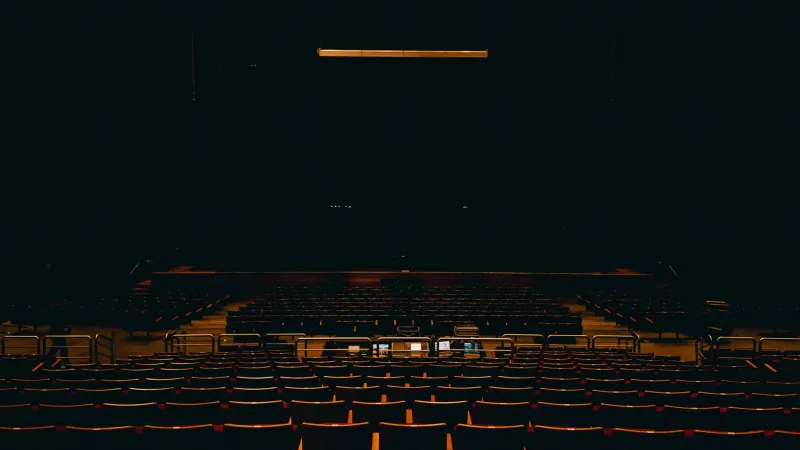
But the collectors will tell you it's more than just scarcity economics. There's something qualitatively different about silence that has been made — silence that exists because a space was built for sound and then abandoned it. A concert hall at 6 a.m., before the crew arrives. The control room of a radio station that went off the air in 1987. The moment — and this one comes up again and again in the community — just before a livestream kicks on, when the encoder is running but nothing has been said yet.
"That pre-stream silence is specific," says Marcus, a sound designer in Chicago who moonlights as a field recorder. "It has anticipation baked into it. The room is technically live. Someone is about to speak. And then they don't yet. That pause is architecturally different from regular quiet. You can feel the shape of what's about to happen."
The Equipment Question
If you spend any time in the forums and Discord servers where these people congregate, you'll notice that the gear debates are ferocious. Some purists insist on omnidirectional microphones that capture the full sphere of ambient space. Others prefer highly directional setups that can isolate a specific zone of quiet within a louder environment — pointing a mic at the far corner of an empty gymnasium, for instance, to record the silence that lives there even when the building itself isn't totally still.
There's also significant discussion about what to do with recordings once you have them. Some collectors simply archive them, building libraries organized by location and acoustic character. Others incorporate them into music — long, meditative compositions where the silence is the primary instrument and any sound that appears is the deviation. A few have started releasing these recordings commercially, on Bandcamp and through small experimental labels, where they find surprisingly devoted audiences.
Renata, for her part, doesn't release anything publicly. Her archive is personal. "I'm not making content," she says, with a slight edge that suggests she's had to explain this before. "I'm keeping a record. There's a difference."
Dead Air as Cultural Memory
What makes this community feel distinctly of-this-moment is the way its members talk about preservation. The empty radio station isn't just acoustically interesting — it's a space that held something, broadcasts and voices and the particular silence between songs at 2 a.m. when the overnight DJ stepped away from the board. Recording the silence that remains there now is, for many of these collectors, an act of memory. A way of honoring what the space used to contain by documenting what it sounds like in its absence.
This is where the practice edges into something that feels almost spiritual, or at least deeply humanistic. These aren't people who hate sound. Most of them are obsessive music listeners, audio engineers, people who have devoted significant portions of their lives to the craft of sonic experience. Their pursuit of silence is inseparable from their love of what silence frames.
"You can't understand what a space sounded like when it was alive if you don't understand what it sounds like dead," says a field recorder who goes by the handle Vesper_Null on the forums and declined to share their real name. "The silence is the negative space. It tells you everything."
The Hardest Silence to Find
Ask any serious collector what the holy grail is and they'll pause before answering. Some say it's an anechoic chamber — a room engineered to absorb nearly all sound, so quiet that visitors report hearing their own blood moving. Others want the silence of deep wilderness, miles from roads or flight paths, in the dead of winter when even the animals have gone quiet.
But a surprising number point to something more mundane and more elusive: the silence of a public space just before it opens. A museum at 8:45 a.m. A movie theater between screenings. A stadium the morning after a sold-out show, when the seats are still flecked with confetti and the air still holds the ghost of seventy thousand voices.
Those silences, they'll tell you, are the ones that feel alive. The ones that remember.
And in a world that has made it nearly impossible to hear yourself think, maybe that's exactly what we're all looking for — proof that quiet, when you finally find it, has something to say.