Built for a Crowd That Never Showed Up: The Haunting Beauty of Spaces Left Mid-Dream

Photo by Photo by Marlene Haiberger on Unsplash on Unsplash
Somewhere in rural Ohio, a roller coaster lift hill rises above a tree line and connects to absolutely nothing. The track ends mid-arc, steel bolts still exposed, as if the whole thing just forgot what it was supposed to become. Nobody ever rode it. Nobody ever screamed on the descent that was never built. And yet — somehow — it's one of the most photographed structures in the county.
This is the strange gravity of abandoned ambition. Not ruins in the traditional sense, not something that lived a full life and crumbled. Something weirder: spaces that were built for people, designed with crowds in mind, engineered for noise and movement and life — and then just... stopped. Waiting. Permanently mid-sentence.
And we cannot stop looking at them.
The Aesthetic Has a Name (Sort Of)
Urban exploration culture has been around long enough to have its own subreddits, its own gear recommendations, its own unspoken ethics. But there's a specific sub-genre within that world that's been gaining serious traction — call it infrastructural melancholy, or maybe just the aesthetics of the almost-was. It's less about decay and more about incompletion. The distinction matters.
A crumbling factory has a history. It lived, it worked, it ended. But an abandoned theme park attraction that opened for one season and closed mid-construction? That thing has a wound. It was made with intention, with marketing materials and investor decks and architectural renderings showing happy families — and then reality showed up and none of that happened.
Photographers who specialize in this niche talk about it in almost spiritual terms. The light hits differently in a space that was built to be full of people and never was. There's something about the scale — the oversized parking structures, the wide pedestrian plazas, the amphitheaters with seating for ten thousand — that becomes surreal when it's empty. Human scale applied to human absence.
America Has a Lot of These
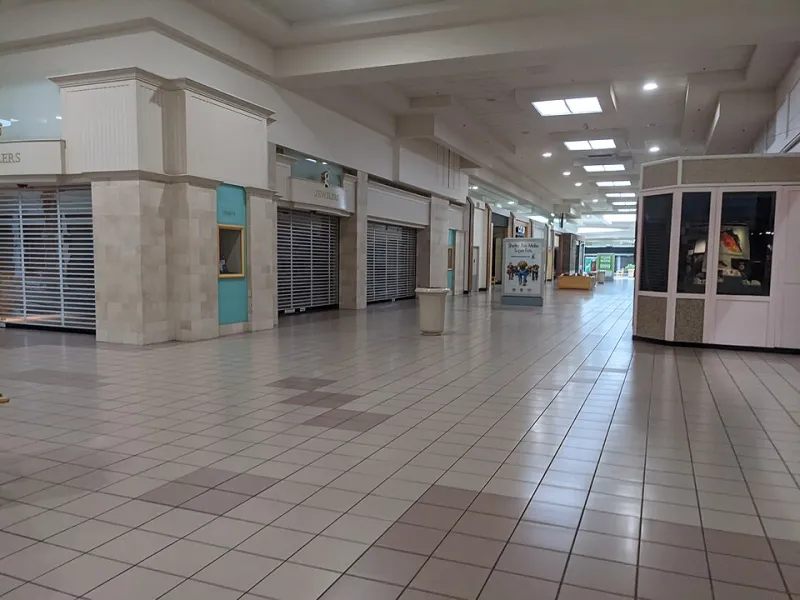
This isn't a global phenomenon so much as it's a deeply American one, though it absolutely exists elsewhere. The US has a particular talent for building big on optimism and abandoning things when the math stops working. Ghost malls are the famous example — dead retail cathedrals that haunt the suburbs. But the more visually compelling version of this is the stuff that was never even finished.
The New Orleans World's Fair of 1984 left behind structures that sat derelict for years. Six Flags New Orleans — itself a post-Katrina casualty — became one of the most-photographed abandoned spaces in the country, its rides slowly oxidizing into something that looks genuinely post-apocalyptic. The Camelback ski resort in Pennsylvania has its own collection of abandoned lift infrastructure. And then there are the Olympic venues — Atlanta's aging facilities, the general weirdness of infrastructure built for a two-week event and then handed off to a city that wasn't sure what to do with it.
Each of these has become a kind of pilgrimage site for a specific type of creative person. Not vandals, not thrill-seekers (well, not only those) — but people genuinely moved by what these spaces represent.
What the Artists Are Actually Doing With It
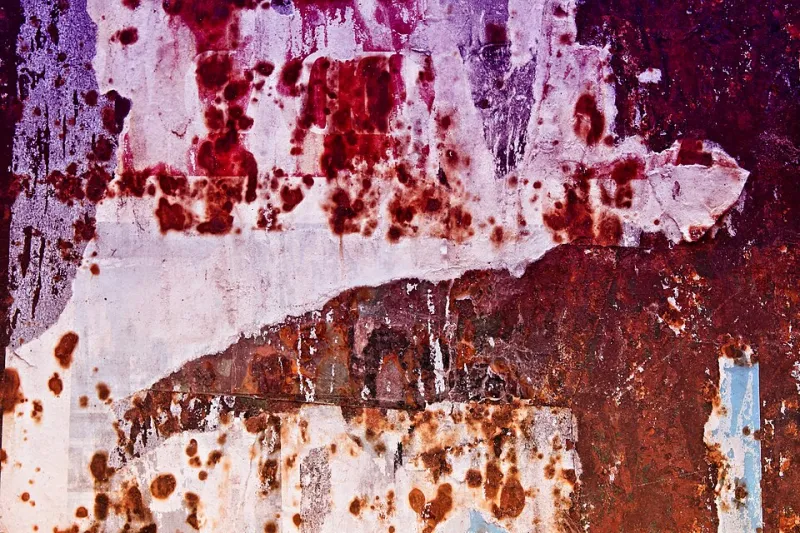
The photography that comes out of these spaces has developed its own visual grammar. Long exposures that turn abandoned waterslides into glowing tubes of color. Wide-angle compositions that emphasize the overwhelming scale of empty parking structures. Close-up macro work on rust patterns and peeling paint that reads almost like abstract expressionism.
But it's not just photographers. Digital artists have started pulling from this visual vocabulary heavily — taking reference images from urban exploration accounts and building them into 3D environments, AI-assisted compositions, or layered digital paintings that push the abandoned-infrastructure aesthetic into something more explicitly fantastical. You'll see it in concept art for games that may never ship, in the background environments of indie films, in the looping ambient video content that's become its own genre on YouTube and TikTok.
There's also a growing community of writers and essayists using these spaces as jumping-off points for thinking about American optimism, urban planning failures, and the gap between projected futures and lived reality. The half-finished highway interchange becomes a metaphor. The empty stadium becomes a text.
Why This Hits Different Right Now
It would be easy to chalk this obsession up to nostalgia or irony — the usual explanations for why people gravitate toward ruins and relics. But that feels incomplete. There's something more specific happening.
We're living in a cultural moment where a lot of people have had the experience of building toward something — a career, a relationship, a version of the future — that simply didn't materialize. The pandemic accelerated that feeling for millions. Plans that seemed solid evaporated. Futures that felt certain just... didn't happen. The experience of incompletion isn't abstract anymore. It's personal.
And so a half-built theme park doesn't just look interesting. It resonates. It's a physical, scalable, walk-through-able version of something a lot of people feel internally. The infrastructure of an unrealized dream, left standing in the weather.
That's not depressing, exactly. Or it's not only depressing. There's genuine beauty in these spaces. The way nature reclaims them. The way light moves through structures that were designed to be crowded and are instead perfectly, hauntingly still. The way you can stand in the middle of a plaza built for thousands and feel, paradoxically, like you're the only person who ever really saw the place.
The Community That's Grown Around the Void
Online, this aesthetic has coalesced into something with real community around it. Instagram accounts dedicated to abandoned infrastructure rack up hundreds of thousands of followers. Discord servers share location tips (carefully, with debates about ethics). There are zines, print-on-demand photo books, even a few small galleries that have shown work in this vein.
What's interesting is how seriously people in this community take the preservation angle. A lot of urban explorers who document abandoned spaces are genuinely motivated by a desire to record what exists before it's demolished or reclaimed. They're not just making art — they're making archives. The photograph of the roller coaster that goes nowhere isn't just an aesthetic object. It's evidence that the thing existed. That someone had a dream big enough to pour concrete for it.
That feels important. Maybe more important than the dream itself.
Because here's the thing about spaces built for crowds that never came: they're not failures in any simple sense. They're records of ambition. Physical proof that someone, somewhere, believed hard enough in a future to build for it. The crowd didn't show. The funding collapsed. The vision didn't survive contact with reality.
But the structure is still there. And in the right light, at the right angle, it's one of the most beautiful things you've ever seen.