Glitch Gospel: How a Generation Fell in Love with Beautiful Failure
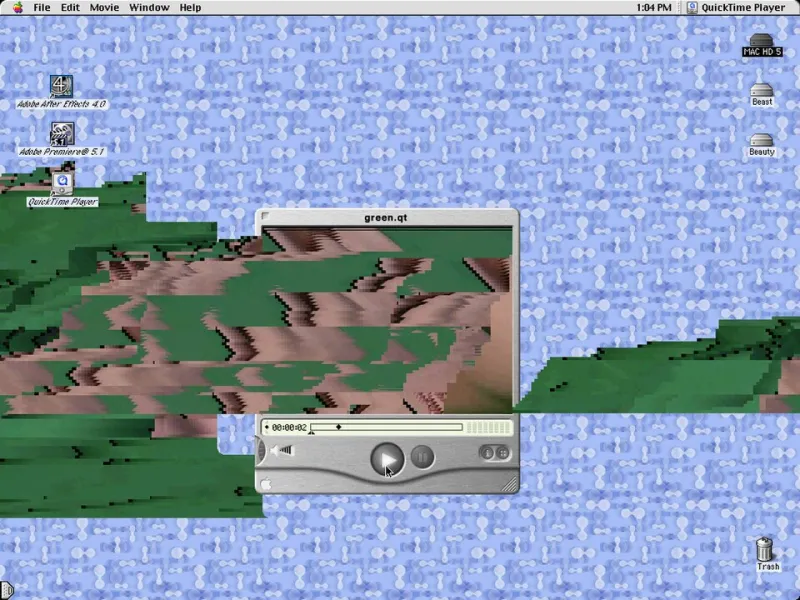
Photo: jonCates, CC BY-SA 4.0, via Wikimedia Commons
Something strange happened on the way to high resolution. We got there — 4K screens, lossless audio, pixel-perfect design systems — and a significant chunk of the internet looked at all that crisp, clean perfection and said: no thanks.
Not ironically, either. Not as a joke. As a genuine, deeply felt aesthetic preference.
The cult of the imperfect isn't new, exactly. Punk had it. Wabi-sabi has been a Japanese philosophical tradition for centuries. But what's happening right now in digital spaces feels different — more urgent, more widespread, and frankly more interesting than any single predecessor. It's a full-on movement built around art that looks like it's actively dying, and it has spawned its own underground economy, its own visual language, and its own kind of beauty.
What We Talk About When We Talk About Broken
Let's be specific, because "imperfect aesthetic" is a phrase that can mean a lot of things.
We're talking about datamoshing — the technique of deliberately corrupting video compression algorithms to produce those liquefying, smearing visuals that look like a nightmare sequence from a 1998 screensaver. We're talking about artists who shoot on disposable cameras and scan the photos on ancient flatbeds specifically to introduce noise, scratches, and color bleed. We're talking about the entire lo-fi hip hop ecosystem, where the whole appeal is audio that sounds like it's being played through a broken speaker in someone's childhood bedroom.
We're talking about VHS aesthetics, scan lines, corrupted PNG files posted without apology, zine-style layouts where nothing is aligned, Tumblr-era gif compression treated as a feature rather than a bug. We're talking about digital paintings left deliberately unfinished, with visible sketch lines and erased marks left in the final image.
The throughline isn't laziness. These things take work. Datamoshing has a technical learning curve. Getting that perfect layer of analog grain on a digital photo requires real craft. The aesthetic of failure is, paradoxically, something you have to work pretty hard to achieve convincingly.
Why Now, Why This Generation
The easy answer is that Gen Z grew up watching the internet get corporate. They watched platforms that started as weird, chaotic creative spaces slowly sand down every rough edge in pursuit of advertiser-friendly smoothness. They watched Instagram pivot from a photo-sharing app to a storefront. They watched authenticity become a marketing strategy.
So the rejection of polish makes sense as a political stance, almost. If perfection is what the algorithm wants, then imperfection is resistance.
But that explanation, while true enough, undersells the emotional dimension. There's something deeper happening here — a genuine hunger for evidence of process, for proof that a human being touched this thing. A glitched image carries the fingerprints of its own creation in a way that a sleek, flawless render doesn't. The failure is the signature.
Artist and theorist Rosa Menkman, who's been writing about glitch art since before most of this audience was in high school, described glitches as "the uncanny aesthetics of error" — moments where a system reveals its own underlying structure by breaking down. That's a generous, almost romantic reading. And a lot of the kids making corrupted pixel art on their iPads probably haven't read Menkman. But they're feeling something adjacent to what she's describing, even if they'd articulate it differently.
"It just feels more real," is something you'll hear constantly in these communities. And that's not nothing.
The Underground Market Nobody Expected
Here's where it gets genuinely interesting from a cultural economics standpoint: this aesthetic has spawned real commerce.
Not the sanitized, mass-market version — though that exists too, and we'll get to it. The actual underground version. Artists selling corrupted image prints on Etsy. Indie musicians specifically marketing their releases as "degraded" or "damaged" audio, with deliberate encoding artifacts baked into the final files. Zine makers charging premium prices for hand-risographed publications where the color registration is intentionally off. Digital artists selling NFTs — yes, still — specifically framed around the aesthetic of decay and impermanence.
There's a whole corner of Bandcamp dedicated to music that sounds like it's being played on equipment that's actively giving up. Labels like Orange Milk Records and Hausu Mountain have built genuine followings around releases that would have been considered unlistenable by conventional standards. The music sounds broken. That's the point. People pay for it.
The irony, of course, is that "broken" has become a brand. The moment an aesthetic gets legible enough to sell, it starts getting commodified by the very forces it was reacting against. You can already buy "VHS effect" presets for Lightroom. Adobe sells glitch filters. Every third brand on Instagram is using that lo-fi grain to seem relatable.
The underground communities are aware of this. They're not naive. The response, typically, is to push further into the weird — to find the next version of broken that hasn't been packaged yet.
What Beauty Actually Means Here
There's a philosophical question lurking underneath all of this that's worth sitting with for a second.
When we say broken aesthetics are "beautiful," what are we actually saying? Are we just inverting the old hierarchy — declaring ugliness beautiful as a form of contrarianism? Or is something more substantive happening?
The more interesting answer, the one that comes through in conversations with the artists actually making this work, is that they're not inverting the hierarchy so much as questioning why the hierarchy existed in the first place. Perfection, in the digital context, has always been a kind of lie — a simulation of an ideal that no physical thing ever achieves. Glitches and artifacts and grain are, in a strange way, more honest about what digital media actually is: fragile, contingent, subject to entropy.
A corrupted image is showing you its own materiality. A lo-fi recording is showing you the physical limitations of the equipment that made it. There's a kind of transparency in the failure that polished work deliberately conceals.
And in a media environment saturated with content engineered to appear effortless and inevitable, that transparency feels like relief.
The Permanence of Impermanence
Here's the last weird twist: a lot of this work is explicitly about decay, but the internet preserves everything. That datamoshed video from 2019 still exists in perfect fidelity on a server somewhere. The corrupted JPEG has been backed up. The aesthetic of impermanence is being archived.
There's something almost funny about that, but also something genuinely moving. These artists are making work about things falling apart, and the internet — that great, indifferent, eternal machine — is keeping it safe.
Broken forever. Preserved forever. The glitch gospel, saved to the cloud.
Maybe that's the most honest thing about all of it.