Terminal Velocity: The People Who Surf the Web in Plain Text
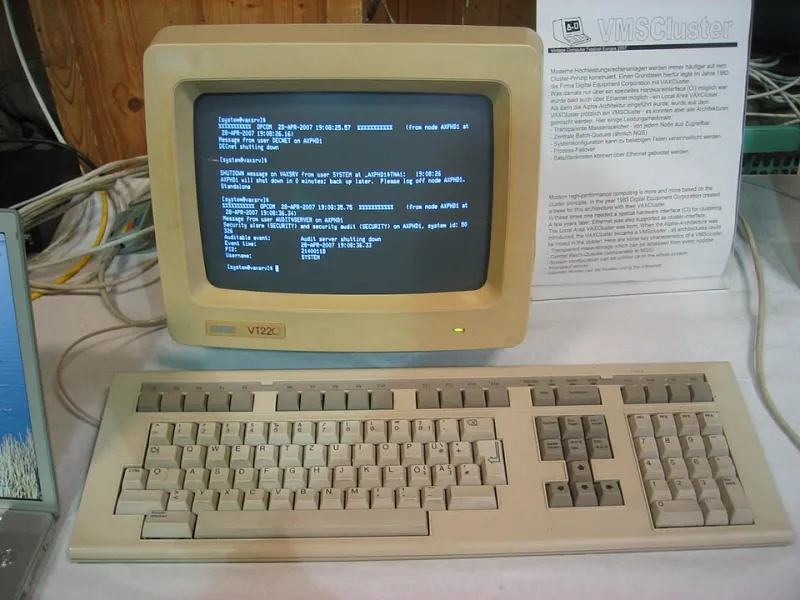
Photo: Gürkan Sengün, CC BY-SA 3.0, via Wikimedia Commons
On a Tuesday night in Kansas City, a person who goes by the handle pxl_grl opens a black window on a laptop, types a command, and the internet appears. No images. No autoplay video. No cookie banner asking her to consent to 847 business partners. Just words in monospace type, scrolling at exactly the speed of reading.
She is not there by accident.
The Browser You Probably Forgot Existed
Lynx has been shipping since 1992 and is still maintained. w3m, links2, and elinks are its siblings, all of them rendering the modern web as a stack of text, links, and mild disappointment when a page insists on JavaScript. For most people these are curiosities. For a small, loud, and increasingly organized subculture, they are the whole front door.
Spend an evening in the right IRC channels or Gemini capsules and you will meet teachers, sysadmins, librarians, a surprising number of nurses, and teenagers who were born after the iPhone and find the terminal calming rather than retro. They call what they do the small web, the smol web, or just browsing like a grown-up. The joke everyone makes is 1978. The reality is closer to 1994 with better search.
A Protocol With No Room for Ads
Gemini is the piece outsiders tend to miss. Launched in 2019 and named for the space program rather than the horoscope, it is a deliberately limited document protocol: one request, one response, one file. No scripts. No tracking pixels. No third-party anything. Encryption is mandatory, so nobody can quietly watch. Pages are written in gemtext, a format so plain that a single afternoon gets you fluent.
People describe it as a zine you can walk into. Capsules — that is what sites are called — top out around a few kilobytes. There are recipe capsules, diary capsules, capsules where someone has transcribed every bird they have seen from their kitchen window since 2022. There is also Gopher, which never fully died and now hosts a cheerful retirement community of its own.
The Neighborhoods Are the Point
What makes this stick is not the software. It is the real estate.
SDF, a public access UNIX system running since 1987, still hands out shell accounts and hosts a genuine social scene. Ctrl-C Club and a constellation of tilde servers do something similar: you get a home directory on a shared machine, you build a small page, you leave a guestbook entry for someone else. You can finger people. You can send a message that arrives as a file. The scale is intentionally wrong for growth and exactly right for knowing your neighbors.
Nostalgia Is the Least Interesting Reason
If you ask why, the first answer is usually attention. The average web page now drags multiple megabytes across the wire before you can read a paragraph, and a large share of that is machinery whose only job is to sell you something or measure you while it does. A text-only page feels like walking into a house with the furniture removed.
But the more serious argument is bandwidth. Not everyone has fiber and an unlimited phone plan. Rural connections, shared devices, older hardware, and library computers are all real constraints, and a multi-megabyte page is a class barrier dressed up as design. Text-first browsing is also a gift for screen readers, for people who read slowly, and for anyone who cannot process a wall of autoplaying movement. The scene has its own phrase for this: bandwidth justice.
And then there is the quieter protest. A terminal is a place the feed cannot follow you. There is no infinite scroll to fall into because there is no scroll. You read a page, you decide where to go, you leave. That is a small act of refusal, repeated daily.
The Honest Objections
It would be dishonest to pretend the scene is all clean lines and good politics. The learning curve is steep and mostly undocumented, which filters for a very specific kind of person. Some corners romanticize a web that was never actually egalitarian — the early internet was largely white, male, and funded by defense money. And there is a whiff of purity politics in the way some advocates talk about images, as if visual culture were the problem rather than the tracking layer wrapped around it.
The better voices in the community know this. They describe text browsing as a room you can choose, not a moral upgrade. Nobody is asking you to throw away your camera.
What They Are Actually Building
Here is the thing the mockers miss: this is not preservation, it is construction. There are new capsules written this week. There are hand-coded index pages and link rolls maintained by people in their twenties. There is a slow, deliberate attempt to see what the internet feels like when the default is a document and the assumption is a reader.
One capsule pxl_grl keeps ends with a line she has clearly written and rewritten. This page is four kilobytes. It is enough.
It is a strange and beautiful thing to load a web page and hear the modem-less silence of it arriving instantly. The people in the terminal already know that sound. They are just trying to get the rest of us to sit still long enough to hear it too.