Version 0.0.0: Inside the Design Scene Making Apps for People Who Don't Exist
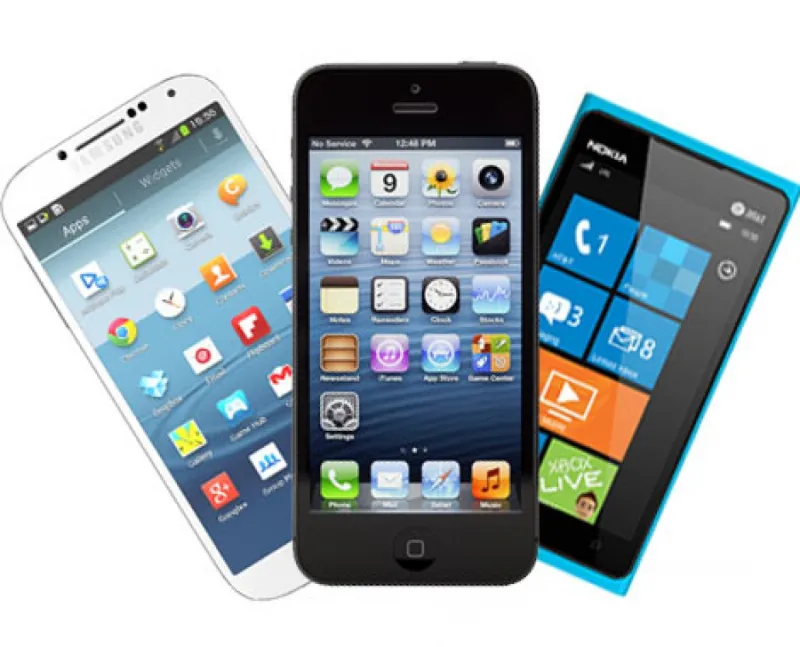
Photo: smartphone mockup wireframe sketches on desk with designer drawing UI screens, via www.theadbuzz.com
The changelog is immaculate. Version 2.3.1 fixes a sync bug that plagued a small number of users on older devices, improves battery behavior during long recording sessions, and thanks everyone who took the time to report the crash on launch. There's a note about a feature being temporarily rolled back. There's an apology with a specific, human tone — not the chirpy corporate kind, the tired kind.
The app does not exist. There is no version 2.3. Number 2.2 never shipped either. There are no users, no crash reports, no devices. The whole thing lives in a folder of mockups and a thread on a design Discord where thirty people spent a weekend arguing about whether the apology note sounded too rehearsed.
Release Notes for Nothing
This is the imaginary app scene, and it's bigger than you'd guess. Designers — some employed, many between jobs — build entire fictional product ecosystems: onboarding flows, empty states, settings menus, App Store screenshots at exactly the right pixel dimensions, privacy policies written in the voice of a company that will never incorporate, support inboxes with unanswered tickets from invented customers who are mildly annoyed about a feature that was never announced.
The practice has its own vocabulary. People talk about the smirk factors — the small frictions you add on purpose so the fake product reads as real. A slightly misaligned icon. A menu item that does nothing. A setting labeled in a way that suggests an argument happened in a meeting. Real software is polished smooth by quarterly goals; fake software gets to keep its fingerprints.
The Craft of a Convincing Empty State
If you want to understand why this takes actual skill, start with the empty state — the screen you see before you've added anything. It's the least glamorous screen in any real app and the most revealing one in a fake.
A good fictional empty state doesn't say get started. It says something slightly odd, like a person who's a little embarrassed to be there. One widely circulated example reads, in full: nothing here yet. that's fine. take your time. Designers in these communities will spend an hour on that punctuation. The period after fine is doing work. Everyone knows it.
Onboarding gets the same treatment. The best fictional flows are built on a specific imagined human: a 41-year-old ceramics teacher in Boise, a night-shift phlebotomist, a guy who bought the app for one very narrow purpose and will abandon it in nine days. The designer writes down that backstory before drawing a single screen. The user never appears anywhere in the product. They just explain every decision in it.
Where the Fake Software Lives
Most of it circulates in semi-public spaces — invite-only servers, personal sites with a case-study layout, portfolio pages that deadpan a shipped release. There are mock press kits. There are very serious typographic specs. There's a whole recurring genre of fake testimonial, and the funniest ones are the mildly disappointed ones, because a five-star quote is cheap and a three-star quote is a story.
The scene also has an etiquette. Don't pretend a fake product is real to outsiders. Don't monetize it in a way that would confuse someone. Do keep the seams visible enough that other designers can see the decisions. The whole thing runs on the idea that the making is the point and the shipping is optional.
Why the Fictional Product Feels More Human
Here's the uncomfortable part. Spend an afternoon inside this stuff and your actual phone starts to feel hostile. Real interfaces are shaped by retention curves, growth experiments, and a hundred tiny pressures that all pull in the same direction: keep the person here, get the number up, never let the screen be empty of something to tap.
The fictional ones are shaped by taste. A designer can put in a slow transition because it feels right. Can write an error message that sounds like a friend, because nobody is A/B testing the apology. Can build a feature that would actively reduce engagement and then draw it beautifully, because there are no metrics to disappoint.
That's not pure escapism either. A lot of the people making this work are designing dashboards for ad platforms they find repellent, or they got laid off in a round of consolidation and haven't landed anything since. The imaginary app is where their judgment goes when there's nowhere to spend it. As one designer put it in a thread I can't stop thinking about: on a real product I'm optimizing, on a fake one I'm deciding.
There's also something pointed happening in 2026, now that generative tools can produce a competent, frictionless interface in about ninety seconds. The reaction inside this scene has been to get weirder and more specific — more invented complaints, more bespoke copy, more evidence of a human having opinions about a comma. The fake apps are getting more personal at exactly the moment real design is getting more interchangeable.
The Complaint Department
My favorite artifact in the entire genre is the fabricated user complaint. Someone will build a fake product, then build a fake subreddit for it, then populate that subreddit with twelve people who are genuinely irritated about a subtle thing: the search doesn't remember recent queries, the export takes too long, the icon changed and they hate the new one.
It's parody, obviously. But it's also a kind of tenderness. Nobody writes detailed, aggrieved feedback for a product they don't care about. Inventing a user who cares enough to be annoyed is a love letter to the idea of mattering to someone, even a someone made up.
And maybe that's the real appeal. Most of us will ship something this year that a stranger uses for eleven seconds and forgets. The designers in this scene have opted out of that math entirely. Their software has one user, that user is imaginary, and they are extremely happy together.