Stuck on Purpose: The Quiet Cult of the Eternal Loading Screen
There's a particular kind of peace that lives inside a buffering circle. You know the one — that little spinning arc that means the thing you wanted hasn't arrived yet, and maybe won't for a while. For most people, it's a minor irritation, a blip between desire and delivery. But for a growing pocket of the internet, that blip is the destination.
Welcome to the quiet, slightly strange world of people who are genuinely, deeply obsessed with loading screens.
The Space Between Promise and Payload
Digital culture has always had a complicated relationship with waiting. The entire architecture of the modern web is engineered to eliminate delay — faster servers, preloaded assets, skeleton screens that fake the illusion of content before the content is actually there. We've collectively decided that waiting is a failure state, something to be optimized out of existence.
But some creators are pushing back on that consensus in the most unexpected way: by making the wait the work.
Artist and interface designer Mara Solís runs a small Neocities page called threshold.html — a site that has been, since its creation in 2021, perpetually loading. The progress bar on its homepage has been at 73% for three years. "People message me constantly asking if the site is broken," she says. "And I tell them no, that's the site. That 73% is the whole thing."
Solís describes the loading screen not as a placeholder but as a kind of visual koan. "There's this incredible tension in a progress bar that never completes. It keeps making a promise. Over and over. And the promise is the art."
Buffering as Aesthetic Language
The fascination runs deeper than a single eccentric webpage. Across Tumblr archives, obscure Discord servers, and niche corners of Bluesky, there's a loosely organized community of creators who have developed what they call "delay aesthetics" — a visual and conceptual language built entirely around incompleteness, interruption, and the suspended moment before delivery.
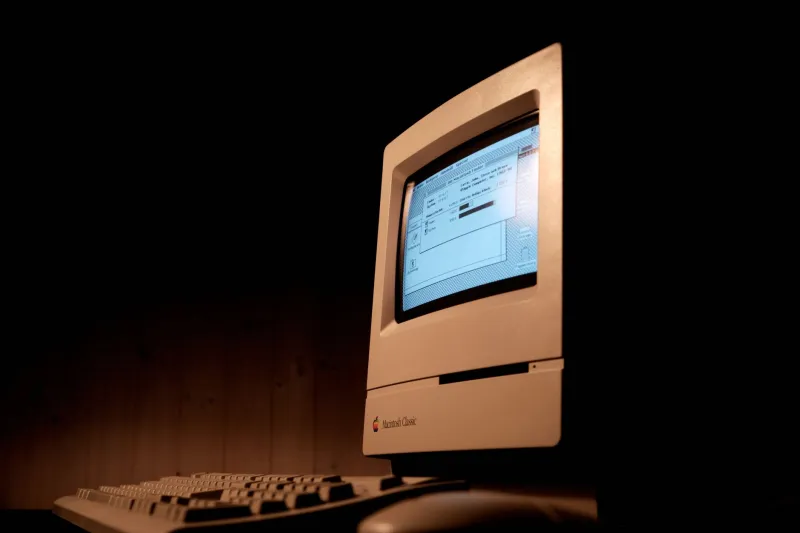
The iconography is specific and lovingly catalogued: Windows XP's stalled file transfer dialog, the rainbow spinning beachball of a frozen Mac, the YouTube buffer ring from around 2009 when home internet was still mostly pretending to be fast. These images circulate as objects of genuine affection, not just nostalgia. They get remixed into looping GIFs, printed onto zines, reconstructed as pixel art.
What's interesting is how these artifacts get recontextualized. In their original lives, they were symbols of failure — evidence that the system couldn't keep up. In delay aesthetics communities, they've been flipped into something almost meditative. The stall isn't a breakdown. It's a breath.
"We're so trained to see the loading screen as the enemy," says digital artist and zine-maker Devon Chu, who publishes a quarterly collection called Please Wait featuring exclusively loading-screen-inspired artwork. "But if you sit with one long enough, it starts to feel like the most honest thing on the internet. Everything else is performing completion. The loading screen is the only thing that admits it isn't there yet."
Coming Soon, Forever
There's a specific sub-genre within this world devoted to the 'coming soon' page — those skeletal placeholders that websites put up when they're not ready to exist yet. Most of them get replaced eventually. But some don't. They just stay, suspended in a permanent state of anticipation, promising something that never materializes.
Archivists in this community have been quietly documenting these pages for years. One spreadsheet, shared in a private Discord server and occasionally leaked to wider corners of the web, tracks over four hundred 'coming soon' pages that have remained unchanged for more than a decade. Some are for businesses that clearly folded. Some are for projects that may never have been real. A few are for things that, as far as anyone can tell, simply forgot to happen.
The archivists don't view these pages with pity. They view them with something closer to reverence.
"A 'coming soon' page that's been up for fifteen years isn't a failure," one archivist wrote in a community post that got passed around widely enough to become something of a manifesto. "It's a monument to possibility. It's still, technically, coming. You can't prove it isn't."
The Meditation No One Designed
There's a psychological texture to all of this that's worth taking seriously. The loading screen, structurally, forces a specific kind of attention. You can't interact with it. You can't skip it. You can only watch and wait, your focus narrowed to a single, repeating gesture of almost-arrival.
For a generation raised inside a media environment engineered to eliminate any moment of stillness — infinite scroll, autoplay, algorithmic queues that never let a feed run dry — that enforced pause is genuinely rare. It might even be genuinely valuable.
Some creators in this space have started leaning into that explicitly, building loading screens that are long enough to function as actual pauses. One developer, who goes by the handle @interstitial_ghost on several platforms, built a personal portfolio site with a loading screen that takes exactly ninety seconds and features nothing but a slow, ambient drone and a bar that moves in irregular, unpredictable increments. "I wanted people to have to sit with not knowing," they explained in a post. "Everything on the internet tells you exactly what's coming and exactly when. I wanted to take that away for a minute."
The response was split pretty evenly between people who found it infuriating and people who described it as, inexplicably, one of the most calming things they'd encountered online in years.
The Art of Almost
What the loading screen obsessives have stumbled onto — maybe without fully intending to — is a critique of completeness culture. The finished product, the polished release, the thing that's finally, fully here carries its own kind of weight. It can be interacted with, judged, consumed, and discarded. It has an ending.
The loading screen has none of that. It exists in a state of permanent potential, which means it can never disappoint you in the way that arrival inevitably does. It's always still becoming. The product it's promising might be extraordinary. You just haven't found out yet.
There's something almost radical about that, in a content economy built entirely around delivery speed and instant access. The deliberate delay is a refusal. The perpetual 73% is a statement.
Mara Solís is still updating threshold.html, though the changes are invisible to visitors — small tweaks to the backend, adjustments to the animation timing, the kind of maintenance you do on something you intend to keep. The progress bar is still at 73%. It will probably stay there.
"People ask me when it's going to be done," she says. "I tell them it's already done. It's just not finished."