Code Archaeologists: The People Digging Up Video Games That Were Never Supposed to Exist Again
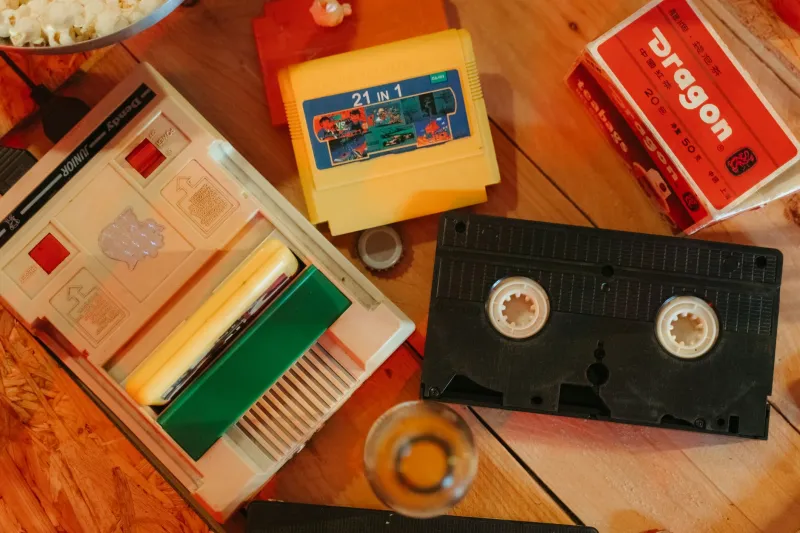
There's a game that never came out. You probably never heard of it. It was in development sometime in the late '90s, got quietly shelved when a studio folded, and the only surviving evidence is a three-minute video ripped from a gaming convention VHS tape and a handful of forum posts from people who played a demo at a regional expo in Ohio. The graphics look rough by today's standards. The gameplay mechanics are barely visible through the compression artifacts. And yet, right now, someone is spending their evenings — after their day job, after their kids go to bed — trying to rebuild it from scratch.
This is what the reconstruction community does. And it is, depending on who you ask, either the most beautiful or most baffling corner of the internet.
What Even Is Game Reconstruction?
Let's be clear about what we're talking about, because it's not the same as emulation or ROM preservation, though it lives in the same neighborhood. Reconstruction is the practice of rebuilding a lost or unfinished game from whatever fragments survived — partial source code, design documents, audio files ripped from prototype cartridges, developer interviews, even the memories of people who worked on the thing twenty-five years ago.
The goal isn't always a playable game. Sometimes it's just a working level. Sometimes it's a single mechanic. Sometimes it's just proving that something existed the way people remembered it, pushing back against the creeping erasure that happens when commercial interests expire and servers go dark.
The Video Game History Foundation has estimated that roughly 87% of classic video games are out of print and essentially inaccessible through legitimate channels. Reconstruction communities exist in that gap — not filling it exactly, but haunting its edges, refusing to let the silence be total.
The Archaeology of Memory
What makes reconstruction different from other preservation work is how personal it gets. Emulation is technical. Archiving is institutional. But reconstruction requires you to climb inside someone else's creative intention and try to understand what they were building before the money ran out or the publisher pulled the plug.
That means reading everything. Developer blogs from 2001 that somehow still load. Forum posts where playtesters described mechanics in enough detail to reverse-engineer them. Patent filings, of all things — because game mechanics sometimes got patented, and those documents describe systems in forensic detail. Old gaming magazine previews, which were written by journalists who played early builds and described them with the breathless enthusiasm of people who had no idea the game would never ship.
One reconstructor — who goes by the handle Ferrite_Ghost on several Discord servers dedicated to this work — spent two years rebuilding a canceled N64 platformer from a combination of a leaked asset pack, a 47-second gameplay clip, and an interview the lead designer gave to a German gaming magazine in 1998. The interview had never been translated into English. Ferrite_Ghost learned enough German to work through it.
"The designer described the physics engine in this one paragraph," they wrote in a post documenting the project. "He was trying to explain why the game felt different from Mario. That paragraph was basically the blueprint."
Why Bother?
The obvious question is: why? Why dedicate years to something that, by definition, was never meant to exist in its current form? Why rebuild a game that a studio decided wasn't worth finishing?
The answers tend to cluster around a few themes. There's the preservation instinct — the conviction that cultural artifacts deserve to survive regardless of whether capitalism decided they were worth keeping alive. There's the puzzle-solving appeal, which is real and intense: reconstruction is essentially a logic problem with an emotional payload.
But there's something else, something harder to articulate. A lot of reconstructors describe a specific feeling — a kind of grief, almost — for things that almost existed. Canceled games occupy a particular emotional space because they represent creative labor that was real, that mattered to the people doing it, and that got erased not because it was bad but because of circumstances entirely unrelated to its quality. A studio merger. A budget cut. A licensing dispute. The arbitrary machinery of the industry.
Reconstructing those games is a way of saying: this mattered. Someone made this. It deserved to exist.
The Community Is Weirder and Warmer Than You'd Expect
The people who do this work are not, for the most part, professional developers or trained historians. They're bartenders and teachers and software engineers and students. They found each other in the comment sections of YouTube videos about canceled games, in subreddits dedicated to gaming history, in Discord servers that started as fan communities and evolved into something more serious.
What holds these communities together is a shared aesthetic sensibility that's hard to define but easy to recognize. There's a genuine reverence for the unfinished, a belief that something incomplete can still be beautiful — maybe more beautiful for its incompleteness, the way a sketch sometimes captures something a finished painting can't.
There's also a fierce, collaborative generosity. People share assets, code snippets, translations, research. Someone who spent six months tracking down a former developer to ask about a single mechanic will post the whole conversation publicly, for anyone to use. The work is communal in a way that commercial game development almost never is.
When the Developers Show Up
Occasionally, the original creators find out what's happening. The results are unpredictable.
Sometimes it's emotional in the best way. Developers who spent years on a project that never saw light suddenly discover that strangers cared enough to dig it back up. Former team members have shown up in Discord servers to answer questions, donate old files, share context that couldn't be found anywhere else. One reconstructor described getting a direct message from a developer who had assumed the game was completely forgotten. "He said it was like finding out a piece of himself had survived," they wrote.
Other times, it's legally complicated. Intellectual property doesn't disappear when a studio does — it gets absorbed into acquisitions and mergers, sometimes ending up owned by companies that have no idea what they have. Reconstruction projects occasionally get cease-and-desist letters from corporations that couldn't tell you the game's title without looking it up.
The community navigates this with a kind of pragmatic resignation. Projects go underground. Builds circulate in private channels. The work continues, just quieter.
The Thing About Saving Something That Was Never Finished
Here's the philosophical wrinkle that the reconstruction community lives inside: what does it mean to complete something that was never meant to be completed by you?
Every reconstruction involves interpretation. You're not just finding the original — you're making decisions about what the original probably was, filling in gaps with your best understanding of the creator's intention. The result is something genuinely new, even if it's trying hard to be something old.
Some reconstructors are uncomfortable with this. They draw strict lines between restoration — getting as close to documented reality as possible — and fan creation, which is something else entirely. Others embrace the ambiguity. The game they're rebuilding never existed in a final form. Their version is as valid as any version would have been.
Maybe that's what makes this whole world feel so distinctly of this moment. We live in an era obsessed with originals and authenticity, but also drowning in fragmentation and loss. The reconstruction community is doing something genuinely strange: they're manufacturing authenticity out of ruins, building real things from the ghost of intentions.
And they're doing it for free, in their spare time, for games that most people have never heard of.
That's either completely pointless or one of the more quietly radical things happening on the internet right now. Honestly, it might be both.