Here Today, Gone on Purpose: The Beautiful Obsession with Media That Destroys Itself
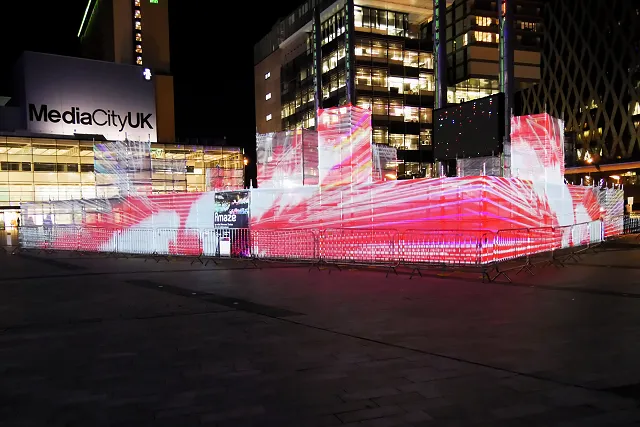
Photo: David Dixon , CC BY-SA 2.0, via Wikimedia Commons
The internet was supposed to remember everything. That was kind of the whole promise, right? Every tweet, every forum post, every blurry JPEG from 2007 — preserved in some server farm in Nevada, theoretically accessible forever. The Wayback Machine exists. Screenshot culture exists. People dedicate entire Discord servers to archiving the digital ephemera of strangers. Permanence is basically the internet's default setting.
So why are so many people right now actively seeking out content that refuses to stick around?
The Archive Is Exhausting
Here's a theory: we broke ourselves with permanence. When everything is saved, nothing feels special. When your embarrassing 2012 Facebook post can resurface at any moment, the past stops feeling like the past — it just becomes another layer of the present, waiting to collapse on you. The internet's obsession with receipts, with screenshots, with "this is still up" callout threads, has turned memory into surveillance.
And people are tired.
That exhaustion is showing up in what we choose to consume and what we choose to create. There's a reason Snapchat's disappearing stories felt genuinely revolutionary when they launched, even if the platform eventually lost the plot. The core idea — content with a built-in expiration date — hit something real. Instagram Stories, TikTok's ephemeral-adjacent feed logic, BeReal's chaotic 24-hour window: all of it is chasing that same feeling. Not nostalgia. The opposite. Relief.
ARGs That Eat Themselves
If you really want to understand this trend at its most intentional, look at the underground ARG scene — alternate reality games, for the uninitiated. These are narrative experiences that bleed into real life: fake websites, cryptic phone numbers, actors playing characters in actual emails. They've existed in various forms since the early 2000s (shoutout to the I Love Bees campaign for Halo 2, a genuine cultural moment), but a newer wave of creators is building them with a twist.
They're designed to leave no trace.
There are ARGs running right now — in small Discord servers, buried in Reddit communities — that explicitly prohibit screenshots and documentation. Participation agreements that are weirdly serious for something technically fictional. Narrative experiences that delete themselves when the story concludes: websites go dark, social accounts vanish, puzzle solutions are wiped. The only record is in the memory of whoever was there.
Creators in this space talk about it almost like a spiritual practice. One anonymous designer, speaking in a now-deleted interview thread that was itself part of an ARG, described the goal as "making something that can only exist in the moment it's experienced." The impermanence isn't a bug. It's the entire point. The art only works because it will die.
Digital Installations That Know Their Shelf Life
Beyond ARGs, digital artists are increasingly building obsolescence into their work at a structural level. We're talking about generative pieces coded to run for exactly one week before the algorithm shifts into something unrecognizable. Interactive installations that only function during a specific lunar cycle — yes, really. Online galleries that lock their archives the moment a show ends, leaving only a landing page that says "this happened."
There's a whole aesthetic emerging around the evidence of a thing rather than the thing itself. The documentation is intentionally incomplete. The experience can't be replicated. If you weren't there, you just... weren't there. And somehow, that exclusivity feels more democratic than a paywalled archive — because money can't buy access to something that no longer exists.
This challenges a lot of assumptions about how digital art is supposed to work. The conventional wisdom has always been that digital work is infinitely reproducible, which was supposed to be a problem for artists trying to establish scarcity and value. But these creators flipped it. Instead of artificial scarcity, they built in actual mortality.
The Psychology of Letting Go
There's a reason this resonates, and it's not purely aesthetic. Psychologists have written a lot about the paradox of choice — how having too many options, or too much accumulated stuff, creates anxiety rather than freedom. Digital hoarding is real. Most of us have bookmarks folders we haven't opened in years, screenshots we saved and forgot about, subscriptions to newsletters we'll never read.
Ephemeral content sidesteps that entirely. You can't hoard it. You can't save it for later. You either engage now or you don't, and either way, it's gone. There's something genuinely freeing about that constraint. It mimics the way humans actually experience time — forward-moving, non-repeatable — in a medium that usually pretends time doesn't apply.
Some therapists working with clients experiencing digital burnout have started pointing to intentional impermanence as a kind of healthy model. Not because forgetting is always good, but because being allowed to forget is. The internet's refusal to let anything die creates a weird temporal anxiety. Ephemeral media, at its best, gives you permission to just... be done with something.
The Tension at the Heart of It
Of course, there's a real contradiction here that's worth sitting with. The most passionate communities around ephemeral media are often the ones most desperate to document it anyway. The no-screenshots ARG still has someone leaking screenshots. The deleted gallery still has someone who saved the files. The disappearing story still gets screen-recorded.
Human instinct toward preservation is powerful. And some critics of the ephemeral trend argue it's a little self-congratulatory — that artists who build in obsolescence are often the ones with the most cultural capital to spare, the ones who can afford to let work disappear because their reputation doesn't depend on any single piece surviving.
That's a fair critique. There's a privilege in impermanence, sometimes.
But it doesn't cancel out what's interesting about the impulse. The countermovement exists because something about permanent digital culture has started to feel suffocating — and artists, as they tend to do, are metabolizing that feeling into form.
What It Means to Be There
Maybe what ephemeral media is really selling isn't the experience itself. Maybe it's the feeling of having been there — which is a feeling that only exists in contrast to people who weren't. Shared impermanence creates community in a weirdly intense way. When something disappears and you saw it, you and everyone else who saw it have something genuinely unarchivable in common.
In a digital landscape where everything is technically accessible to everyone forever, that's actually pretty rare.
And rare, it turns out, still means something. Even — especially — when it's gone.