Haunted by the Feed: When the Algorithm Keeps Resurrecting Creators Who Already Left
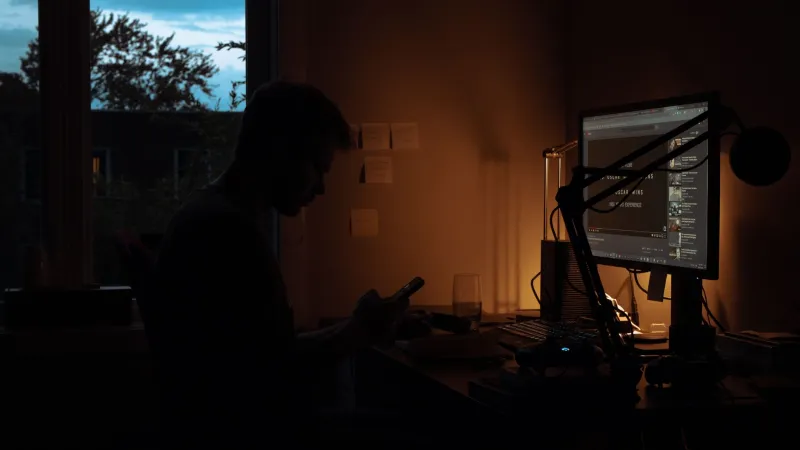
Somewhere around 2 a.m. on a Tuesday, you fall into it. A video surfaces — maybe a soft-spoken person reviewing obscure horror paperbacks, or someone doing incredibly detailed ink drawings of brutalist architecture, or a woman who used to post weekly vlogs from her apartment in Cincinnati about absolutely nothing in particular. The content is good. Genuinely good. You watch one, then four, then eleven. You're hooked.
Then you scroll to the channel page and notice the last upload was four years ago. The comments are a graveyard of people asking where they went. Nobody answered.
Welcome to the loneliness algorithm.
The Machine That Doesn't Grieve
Recommendation systems — the invisible architecture behind YouTube's autoplay, TikTok's For You page, Instagram's Explore grid — are not designed with mortality or departure in mind. They're optimized for engagement, for watch time, for the particular neurological itch that makes you tap next instead of closing the app. Whether a creator posted yesterday or disappeared in 2019 is largely irrelevant to the math.
What matters is signal. And dead archives, it turns out, generate a lot of it.
A creator who spent years building a catalog of tightly edited, highly rewatchable content has, in algorithmic terms, aged beautifully. Their work has accumulated comments, shares, and saves over time. Their retention rates are often excellent — people who find old videos tend to binge hard, which tells the algorithm this is quality content worth surfacing again. The machine interprets absence as stability. No controversy. No messy pivots. No burnout videos. Just a clean, consistent archive that performs well every time someone new stumbles in.
The algorithm doesn't know they're gone. It only knows their content still converts.
Falling for Someone Who Isn't There
There's a specific flavor of parasocial grief that comes from this experience, and it's distinct from mourning a creator you followed in real time. When you discover someone's archive post-disappearance, you compress years of their presence into a single sitting. You get parasocially attached at warp speed — their voice, their humor, their particular way of framing the world — and then you hit the wall.
The wall is always the same: a final upload with no explanation, a comment section slowly filling with people who found them the same way you did, and an internet-wide silence where that person used to be.
Psychologists who study parasocial relationships have noted that the grief following a creator's departure can feel disproportionately intense to people who weren't even around for the original run. There's a specific kind of loss in falling for something that was already over before you arrived — like watching a great TV series finale before you've seen the pilot, except the emotional weight somehow still lands.
For some people, this experience becomes recursive. They go looking for information about where the creator went. They find Reddit threads from three years ago, equally confused. They find archived social media profiles. Sometimes they find obituaries.
When Disappearance Means Something Darker
Not every creator who goes quiet simply burned out or moved on. Some left the internet because they were being harassed. Some left because their mental health demanded it. Some died.
This is where the algorithm's indifference becomes genuinely uncomfortable.
There are YouTube channels belonging to people who have passed away that continue to receive thousands of new views per month, driven entirely by recommendation traffic. Their comment sections function as something between a memorial and a message board — longtime fans leaving tributes alongside newcomers who have no idea they're watching a posthumous archive. The platform's systems keep the content monetized in some cases, the revenue going to estates or simply accumulating in limbo.
The algorithm has no protocol for death. It has no flag for this person is gone and new viewers should probably know that. It just keeps serving the content because the content keeps performing.
There's something genuinely haunting about that — not in a spooky, metaphorical way, but in a concrete, infrastructural way. The internet's recommendation machinery is actively creating new audiences for voices that have gone permanently silent, generating fresh rounds of emotional investment in people who cannot respond, cannot grow, cannot evolve. It's a loop with no exit.
The Archive as Afterlife
Not everyone who disappears stays gone, of course. Some creators return. Some post a single video years later explaining everything, or nothing. Some quietly start over under a different name. The ones who left by choice often describe the experience of their old content continuing to circulate as deeply strange — like hearing your own voice from a different life, being introduced to new people who want a version of you that no longer exists.
There's a creator who ran a beloved channel about analog photography in the early 2010s who described coming back to find thousands of new subscribers accumulated in her absence, all of them expecting content she no longer felt connected to. The algorithm had kept building her an audience. The audience had no idea the person they were following had changed entirely.
In a weird way, the recommendation feed had preserved a version of her she'd deliberately walked away from — and then handed it to strangers as if it were current.
What We Owe the Digital Ghosts
There's a real conversation to be had about platform responsibility here — about whether YouTube, TikTok, and Instagram have any obligation to contextualize archival content, to flag inactive accounts, to at minimum inform new viewers that the person they're about to get attached to hasn't posted since the Obama administration.
But there's also something worth sitting with on a more personal level. When the algorithm drops you into someone's archive, you're not just consuming content — you're entering a relationship with a past version of a person, mediated entirely by a system that has no idea what a person even is. The intimacy feels real because it is real, in the ways that matter emotionally. The absence, though, is also real.
Maybe the most honest thing we can do is hold both of those truths at once. Appreciate the archive for what it is. Acknowledge what it isn't. And maybe — just maybe — leave a comment that treats the comment section like what it's actually become: a letter to someone who may never read it, in a house the internet refuses to let go dark.
The algorithm will keep recommending them. The feed will keep resurrecting them. That part, we can't control.
What we do with the haunting — that part's still ours.