Ghost in the Machine: When AI Art Stopped Being a Novelty and Started Being a Threat
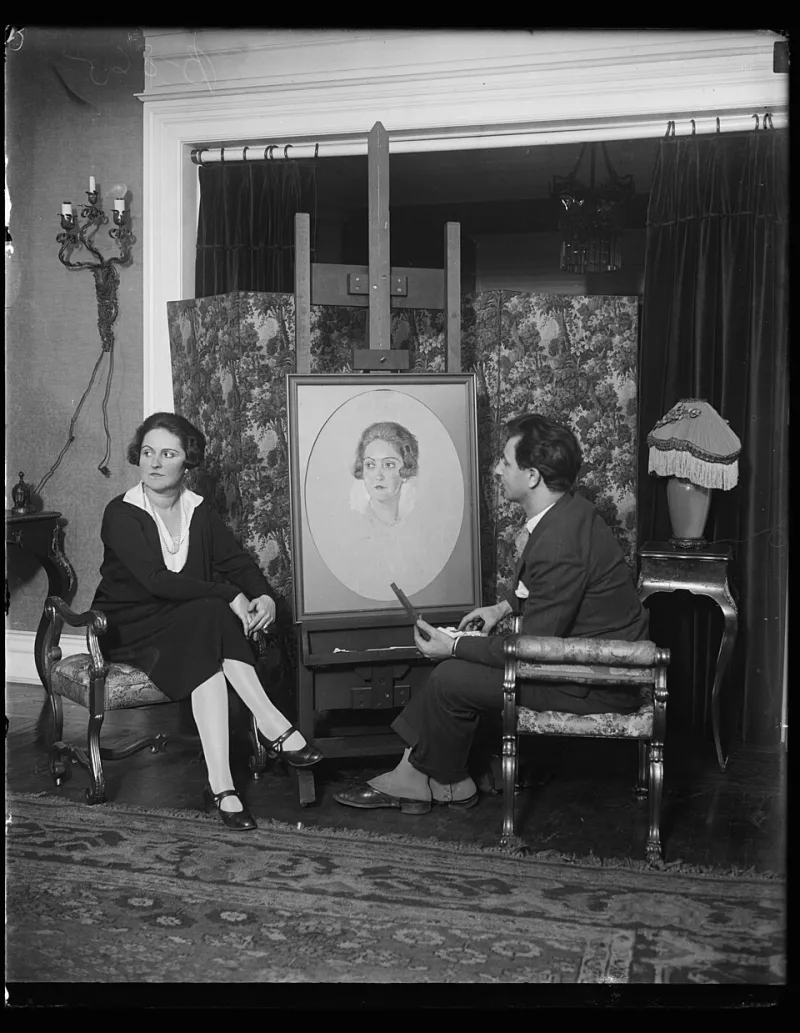
Photo: Harris & Ewing, photographer, Public domain, via Wikimedia Commons
There's a particular feeling you get scrolling through an AI-generated image gallery. Something in the back of your skull goes quiet. The work is beautiful, sometimes achingly so — soft gradients, impossible architecture, faces that look like everyone and no one. And then your brain catches up and whispers: nobody made this. That whisper is getting louder.
We're living through one of the stranger cultural inflection points in recent memory. Generative AI tools — Midjourney, Stable Diffusion, Adobe Firefly, DALL-E — have exploded from niche tech-bro obsessions into mainstream creative pipelines almost overnight. And the creative community? It's not taking this quietly.
The Uncanny Valley Has a New Address
For decades, the "uncanny valley" was a robotics and animation concept — that unsettling dip in human comfort when something looks almost human but not quite. We're now watching that same phenomenon colonize the art world. AI-generated imagery has gotten so technically proficient that the gap between "made by a person" and "made by a model trained on millions of persons" is closing fast. For casual viewers, it's already effectively closed.
Kai Engström, a freelance digital illustrator based in Portland who's been working in the space for over a decade, described it to us plainly: "I've had clients send me AI images and ask me to 'just clean them up a little.' They don't even register that something fundamental has changed. The output looks like work. So to them, it is work."
That collapse — between looking like art and being art — is exactly where the authenticity crisis lives.
What Do We Actually Mean When We Say 'Real' Art?
Here's where it gets philosophically messy, and honestly, kind of exciting if you're into that kind of thing (you're on Igneqta, so we're guessing you are).
The question of what makes creative work "authentic" has never been clean. Warhol ran a studio that mass-produced images. Jeff Koons famously employs hundreds of fabricators. Musicians use samples, loops, and Auto-Tune. Photography was once dismissed as mechanical reproduction masquerading as art. Every technological shift reshapes the boundaries, and every generation of artists has had to fight for their tools to be taken seriously.
But this moment feels categorically different, and not just because artists are defensive about their livelihoods — though they absolutely should be, because the economic threat is real and documented. The deeper discomfort is ontological. When a model generates an image, it isn't expressing anything. It isn't remembering a childhood. It isn't processing grief or desire or wonder. It's executing a statistical prediction about what pixels should follow other pixels, based on an ocean of human-made work it was trained on — often without the consent of the artists whose work fed it.
Dr. Renata Cho, a philosopher at NYU who focuses on aesthetics and technology ethics, put it this way: "We've always understood art as a form of communication between minds. The AI image breaks that contract. There's no sender. There's just signal."
The Consent Problem Nobody Wants to Talk About Enough
Let's not skip past that consent issue, because it's enormous. The major generative image models were trained on datasets scraped from the internet — DeviantArt, ArtStation, personal portfolios, stock libraries — without asking the creators whose work was ingested. That work became the raw material for systems that now compete directly with those same creators.
Class action lawsuits are already winding through the US court system. The outcomes will shape the industry, but even a favorable ruling for artists won't undo the cultural shift that's already happened. The models exist. The outputs are everywhere. Pandora's box, as they say, doesn't have a great return policy.
Many artists have moved to watermarking everything, using tools like Glaze (developed by researchers at UChicago) to "poison" their images against being scraped effectively. It's a kind of digital self-defense that shouldn't have to exist — but does.
The Developers Aren't Villains (It's More Complicated Than That)
It would be easier if this were a clean story about corporate bad guys and victimized artists. It isn't, quite. Some of the people building these tools are themselves artists, designers, and creatives who genuinely believe they're democratizing access to visual expression — giving people without technical drawing skills a way to externalize their imagination.
That's not nothing. There's something real in the idea that someone with a vivid inner world but no formal training can now produce images that match what they see in their head. The question is whether that value justifies the costs — and who gets to decide.
For now, the answer seems to be: the market, mostly. And markets are not known for their sensitivity to the nuances of artistic authenticity.
Where Does That Leave the Creative Community?
The artists we talked to aren't uniformly opposed to AI — that's a nuance worth holding onto. Several are actively experimenting with generative tools as part of their practice, using them as a starting point, a mood board, a collaborator. What they universally resist is the erasure of human intentionality from the conversation about what art is and who it's for.
"I'm not afraid of the tool," Engström told us. "I'm afraid of the culture that says the tool is enough. That the output is the point. That the human in the loop doesn't matter."
That fear is legitimate. And it's worth sitting with — not as a reason to reject the technology wholesale, but as a compass for how we build culture around it. Because the crisis of authenticity isn't really about pixels or prompts. It's about whether we still believe that the human experience of making something matters. Whether the struggle, the intention, the specific and irreducible perspective of a person sitting with an idea — whether all of that is worth preserving in the work itself.
We think it is. The ghost in the machine is impressive. But it's still just a ghost.