Rotting Beautifully: The People Who Mourn the Internet's Dead Zones
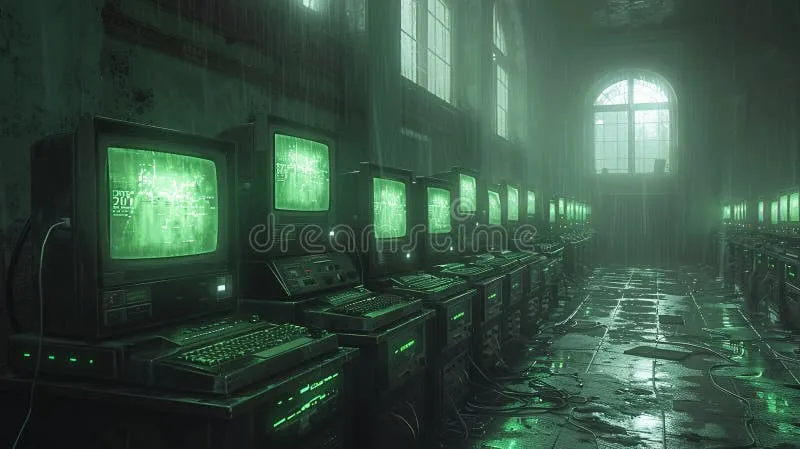
Photo: old abandoned computer screen glowing dark room retro internet, via thumbs.dreamstime.com
Somewhere on the Wayback Machine right now, a 2003 fan page for a mid-tier nu-metal band is perfectly preserved. Tiled flame GIFs border a black background. A MIDI file of "In the End" loops automatically. The guestbook has seventeen entries, the last one from 2007, signed by someone named xXDarkAngelXx who says only: still here.
Nobody built that page to become an artifact. But that's exactly what it is.
The New Ruins
When historians talk about ruins, they usually mean stone. Crumbling amphitheaters. Moss-eaten castle walls. The romantic decay of something physical, something you can press your hand against and feel the weight of time. But a new generation of digital archaeologists — and that's not too dramatic a word for them — has started applying the same reverence to the internet's abandoned architecture.
Defunct message boards. Frozen MySpace profiles. Entire social ecosystems that evaporated overnight when a platform pulled the plug or simply ran out of money. These are the ruins of our era, and a surprisingly dedicated community has decided they're worth grieving.
The fascination isn't just nostalgic, though nostalgia is definitely part of it. It's something more textured than that. It's about bearing witness to how people lived online — what they cared about, how they talked to strangers, what they chose to make permanent when the internet still felt like a place you could actually own a small piece of.
What Makes Dead Web Beautiful
There's a design language to early internet that modern aesthetics have completely abandoned: the visual chaos of personal homepages, the chunky pixel fonts, the unironic use of under-construction GIFs. To contemporary eyes trained on minimalist UI and algorithmic feeds, it looks almost alien. But spend enough time in it and something shifts. The messiness starts to read as humanity. Every mismatched color scheme was a choice someone made. Every blinking banner ad was somebody's attempt at self-expression on a canvas they didn't fully understand.
Communities like the Yesterweb movement and various "old web revival" Discord servers have been quietly building entire philosophies around this. They're not just collecting screenshots — they're arguing that the early web represented something genuinely lost: a more personal, less monetized relationship between people and their online presence. The decay is evidence of what we gave up.
That argument hits differently when you consider what replaced all of it. Platforms that own your content. Feeds curated by engagement algorithms. Profiles optimized for visibility rather than expression. Against that backdrop, even a terrible 2001 fan site looks kind of radical.
The Archaeology of Feeling
There's a specific emotional experience that comes with stumbling onto a truly dead corner of the internet. It's not quite sadness. It's not quite wonder. It sits somewhere between the two — the same feeling you get reading someone's old diary, or finding a receipt in a used book. The sense that a real person was here, had feelings, moved on, and left this small trace behind.
Reddit's r/AbandonedPlaces has a digital equivalent in communities dedicated to documenting defunct web spaces, and the posts read with the same reverent, slightly melancholy energy. Someone finds an active-seeming forum that posted its last message in 2011. Someone else locates a collaborative fiction project that was apparently mid-story when the site went dark. The thread just... stops. Nobody wrote the ending.
That incompleteness is a big part of the appeal. The internet was supposed to be permanent — we were told everything lives forever in some server somewhere. But it turns out digital spaces die all the time, and they die messily, mid-sentence, without ceremony. That's genuinely haunting in a way that physical ruins, with their long slow decline, aren't.
Preservation as Protest
Not everyone in this space is purely sentimental about it. For a lot of the people doing active digital preservation work — archiving sites before they disappear, documenting platform histories, contributing to projects like the Internet Archive — there's a political edge to the project.
The argument goes something like this: when corporations own the infrastructure of online life, they also control what gets remembered. Platforms delete content, purge inactive accounts, shut down without warning. The cultural record of entire communities — queer spaces from the early 2000s, disability forums, niche creative collectives — vanishes without trace. Preservation is a way of refusing to let that erasure be total.
This is where the aesthetic and the ethical blur together in interesting ways. Loving the look of a dead Angelfire page is one thing. Actively fighting to make sure the next generation of weird, personal, non-monetizable internet doesn't disappear is another. But the same impulse is driving both — a conviction that what people made online, even the embarrassing stuff, even the unfinished stuff, matters.
Still Here
Back to xXDarkAngelXx and their 2007 guestbook message. We don't know who they were. We don't know if they're still a fan of that band, or even if they're still alive. But they showed up, signed in, and left a mark on something that technically no longer exists in any living sense — and yet somehow, impossibly, still does.
That's the thing about digital ruins that keeps pulling people back. The decay isn't total. The ghost is still in there. And for a generation that grew up watching the internet get cleaner, faster, more profitable, and somehow less theirs with every passing year, there's something genuinely comforting about finding evidence that it was once otherwise.
The dead web isn't dead. It's just waiting for someone to notice it's still here.